
Only 26 of 40 Major Industrial Companies Say Their Injury Rates Include Contractors, SDS Manager’s Study Finds
SDS Manager study of 600 safety figures finds most firms label contractor deaths clearly, but only 7 of 40 publish the
Press Release Disclaimer: This is a press release distributed through the XPR Media network. It has not been independently verified by our newsroom.
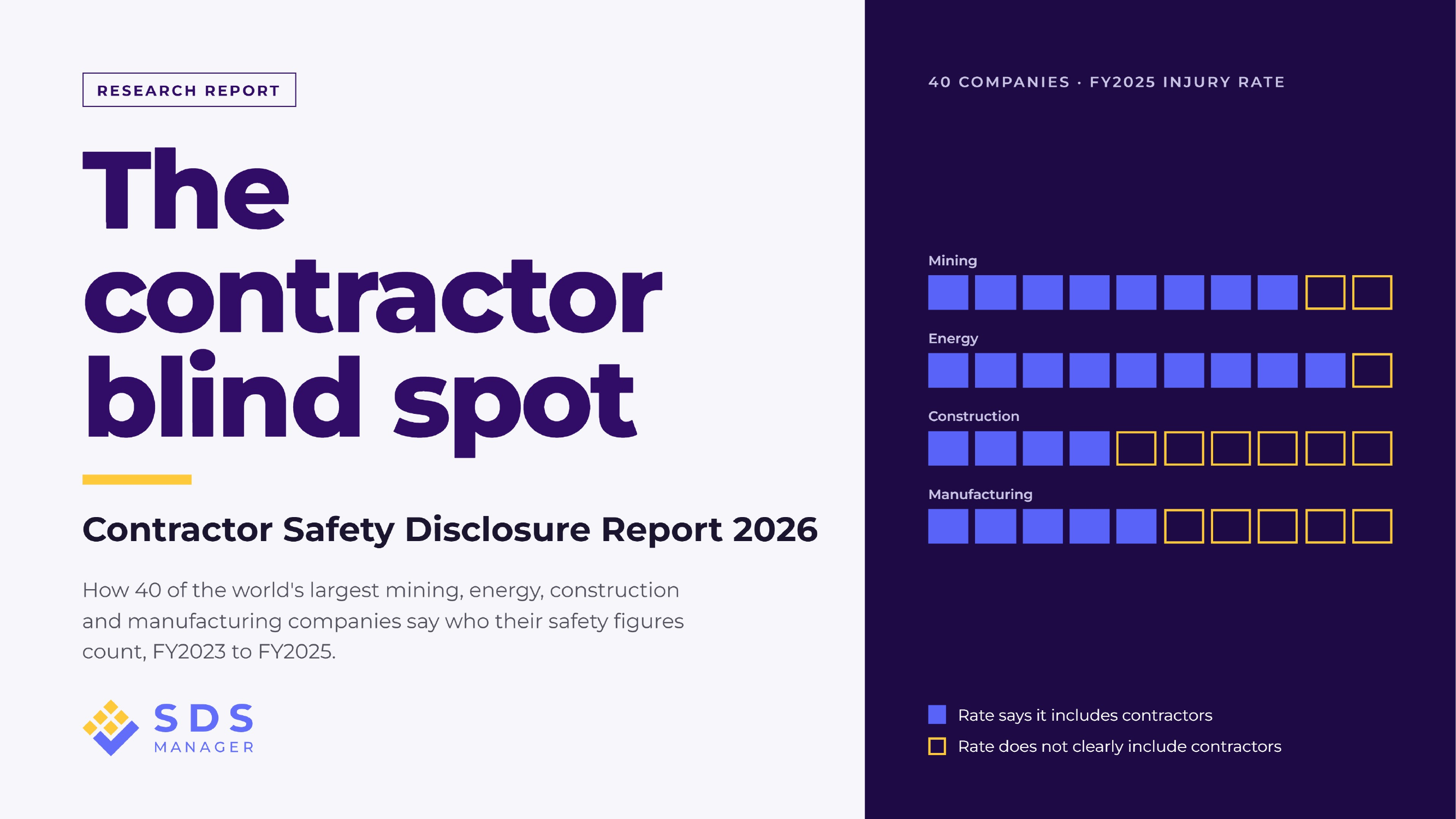

SDS Manager study of 600 safety figures finds most firms label contractor deaths clearly, but only 7 of 40 publish the contractor hours behind injury rates.
DOVER, DE, UNITED STATES, October 18, 2026 /EINPresswire.com/ — SDS Manager’s Contractor Safety Disclosure Report 2026 finds that contractor deaths are usually reported clearly, but injury rates and the hours behind them often aren’t. Only 7 of the 40 companies publish contractor hours worked.
Only 26 of 40 of the world’s largest mining, energy, construction and manufacturing companies say their published injury rates include contractors, according to a new study released today by SDS Manager, a provider of safety data sheet and EHS management software. Contractors often do the most hazardous work at mines, plants and job sites. A rate that counts only employees can make a company look safer than the work it directs.
The Contractor Blind Spot: Contractor Safety Disclosure Report 2026 reviewed 600 safety figures from three years (FY2023–FY2025) of public sustainability reports, ESG data books and annual reports. The 40 large listed companies span four sectors, 10 in each. Researchers asked one question of every figure: does the report say whose injuries are counted?
Most reports label deaths clearly. Far fewer label injury rates, and fewer still publish the contractor hours needed to check those rates. That matters for investors, customers and safety professionals who compare companies on these figures.
Key findings
Key numbers for FY2025, out of 40 companies. Source: SDS Manager, Contractor Safety Disclosure Report 2026.
Deaths are counted clearly. In FY2025, 31 of 40 companies said their fatality count includes contractors. Across all three years, 80% of fatality figures name contractors as counted.
Injury rates are often silent. In FY2025, 14 companies’ injury rates didn’t clearly include contractors. The most common reason wasn’t exclusion but silence: 5 published a rate with nothing beside it saying who it counts. Only 2 stated their rate covers employees only.
Hours are the missing piece. In FY2025, only 7 companies published contractor hours worked, all in mining and energy. Without those hours, readers can’t check how a contractor injury rate was built or compare it with another company’s. Across three years, just 21% of hours-worked figures say they include contractors.
Serious injuries are often missing. Researchers could not find nearly half of the serious-injury figures they looked for (58 of 120). Many companies give contractors only a fatality count.
Year-over-year comparisons need care. 108 of 400 FY2024 and FY2025 figures can’t be compared directly with the year before, often because labels or reporting boundaries changed.
Wording can mislead, too: “including non-employees” doesn’t always mean contractors. Of 325 figures that name non-employees, 28 widen the count to temporary or agency workers but leave contractors out.
Contractor coverage by measure, FY2023–FY2025. Source: SDS Manager, Contractor Safety Disclosure Report 2026.
Construction and manufacturing disclose the least about contractor safety
None of the 20 construction and manufacturing companies published contractor hours in FY2025. Construction met each disclosure test least often, while mining and energy labeled their figures most clearly.
Companies meeting each test in FY2025, out of 10 per sector. Source: SDS Manager, Contractor Safety Disclosure Report 2026.
Two construction companies had not published FY2025 reports when data was collected, so they meet no test that year.
Year-over-year totals look stable, but how companies label safety figures keeps changing
Sixteen companies changed on a key disclosure test at least once between FY2023 and FY2025, even though headline totals barely moved. Some labels became clearer. Others went backward: one manufacturer moved from naming contractors, to employees only, to no statement at all. Reporting boundaries also moved: of the 600 figures, 167 were limited to operated sites and 91 were affected by acquisitions or disposals.
Five practices for clearer safety reporting
None of these requires new data, only clearer labels on data companies already hold:
Label every figure with who it counts, such as “employees and contractors” in a footnote under each table.
Show contractors separately and in the total, so readers can see where the risk sits.
Publish the hours behind every rate, split by employees and contractors.
Keep definitions stable and flag changes, restating the prior year on the new basis.
Report serious injuries for contractors too, using the GRI 403-9 high-consequence injury measure.
Source: SDS Manager, Contractor Safety Disclosure Report 2026.
About the study
The 40 companies were selected by market value before any report was read, and their names are withheld. Researchers reviewed 135 public reports and data files published as of early October 2026, covering five measures: fatalities, serious injuries, recordable injury rates, lost-time injury rates and hours worked.
Each figure was coded twice in blind, independent AI-assisted passes using one written guide. The passes agreed on 82.8% of figures (497 of 600), and disagreements were settled against the source page. Human reviewers then checked randomly drawn figures against their sources. Every coded figure links to the page or cell it came from.
The study measures how clearly companies label their safety figures. It does not measure or rank how safe any company is. A figure that couldn’t be found is not a zero, and an unclear label is not evidence of poor safety.
About SDS Manager
SDS Manager helps organizations manage safety data sheets and chemical safety compliance. Its EHS Solutions help companies track contractor safety alongside their own workforce.
Learn more at sdsmanager.com
Tasmim Wahed
SDS Manager
Visit us on social media:
LinkedIn
Facebook
YouTube
X
Legal Disclaimer:
EIN Presswire provides this news content “as is” without warranty of any kind. We do not accept any responsibility or liability
for the accuracy, content, images, videos, licenses, completeness, legality, or reliability of the information contained in this
article. If you have any complaints or copyright issues related to this article, kindly contact the author above.

Media gallery

